
20 Modern Tiny Home Office Ideas for Small Modern Spaces
Creating a space where you can think, focus, and feel inspired matters more than square footage. With the right Tiny Home Office Ideas, even the smallest corner can reflect your personality and support your daily flow. It’s not just about fitting a desk into a tight spot—it’s about shaping a space that feels calm, personal, and truly yours. Sometimes, the smallest changes can make a world of difference.
If your space feels limited right now, that’s okay—it’s all part of the journey. These 20 Tiny Home Office Ideas are here to help you see new potential in places you may have overlooked. From cozy nooks to smart layouts, there’s something waiting to click for you. Keep exploring, because your perfect little workspace might be hiding in plain sight.
20 Creative Tiny Home Office Ideas for Maximum Productivity
1. Maximizing Vertical Space in a Tiny Home Office
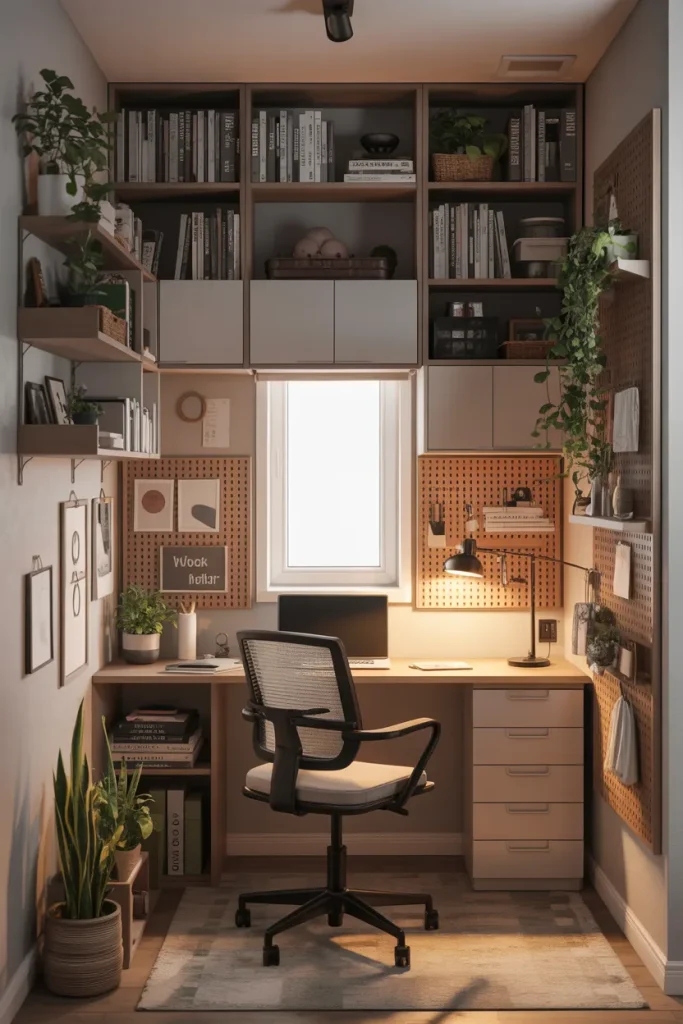
Using vertical space helps you keep your desk surface clean and functional. Add shelves on the wall to store books, decor, and paperwork neatly. This improves organization and keeps everything within easy access.
Place plants and greenery on shelves to create a fresh atmosphere. Use wood tones to add warmth and balance the overall design. A well-planned corner setup makes your workspace feel open and efficient.
Must-See: Small Coffee Bar Ideas
2. Efficient Lighting Solutions for Productivity
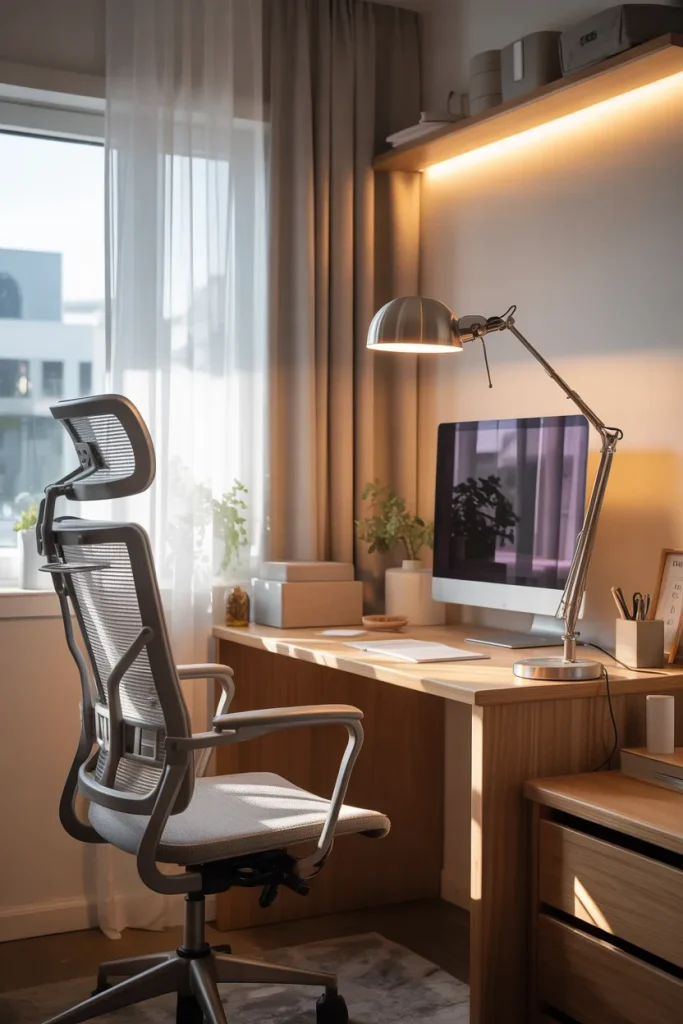
Good lighting improves productivity and keeps your workspace comfortable throughout the day. Use sunlight from a window to brighten your desk area naturally. This helps reduce strain and supports better focus.
Add a ceiling pendant or adjustable lamp for focused lighting. Place lighting near shelves and your chair for balanced brightness. A clean and well-lit atmosphere makes your workspace more inviting.
3. Organizing Cables and Tech Gear
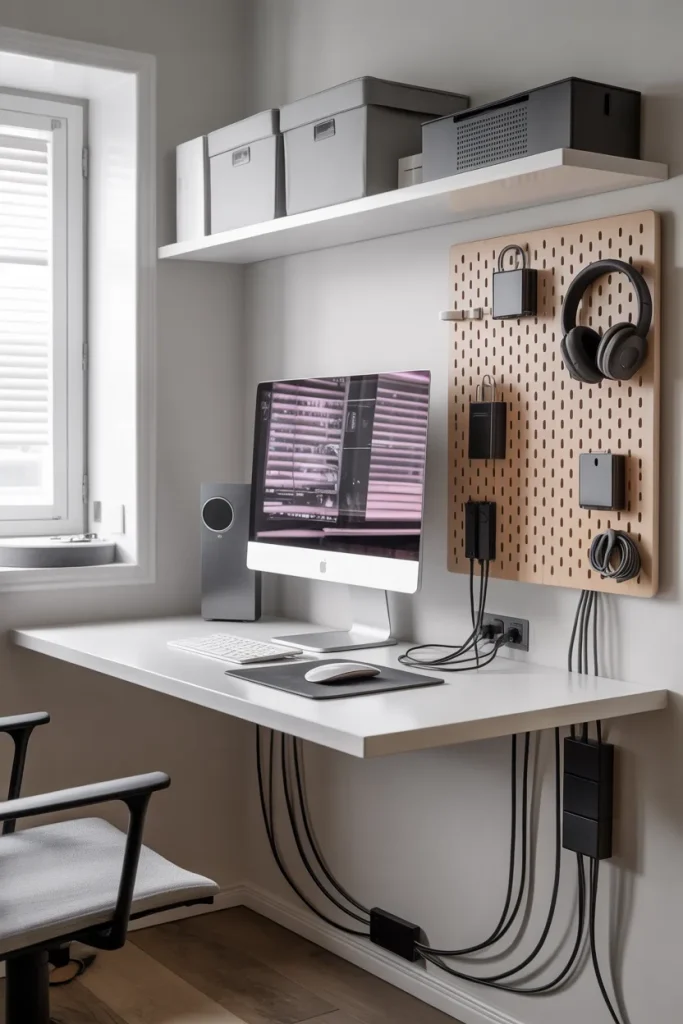
Cable organization keeps your desk setup clean and easy to manage. Use clips and sleeves to prevent tangling and improve cable management. This creates a neat environment around your computer and speakers.
Store tech gear and accessories on shelves for better access. Keep lighting and lamps positioned without clutter from cables. A tidy setup improves both style and daily efficiency.
4. Incorporating Multi-Functional Furniture
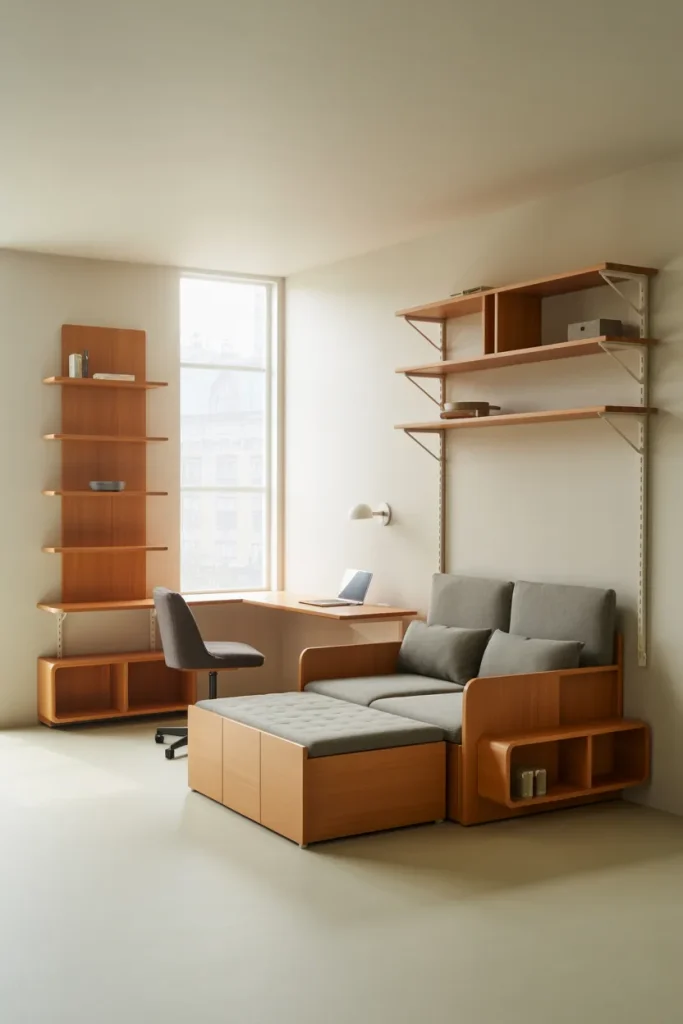
Multi-functional furniture helps maximize space in a small office. Choose a desk with built-in storage to organize supplies easily. This improves the balance between design and function.
Use chairs that support comfort and allow smooth movement. Add cabinets to store items without crowding the space. This creates an organized and practical workspace.
5. Designing a Cozy Reading Nook
A reading nook adds comfort and relaxation to your workspace. Place a chair near a window to enjoy natural light while reading. Add a soft pillow for extra comfort.
Include bookshelves for storage and decor to enhance the atmosphere. Add plants and a small table for coffee to complete the space. This setup supports relaxation and focus.
Must-See: Tiny House Decor Ideas
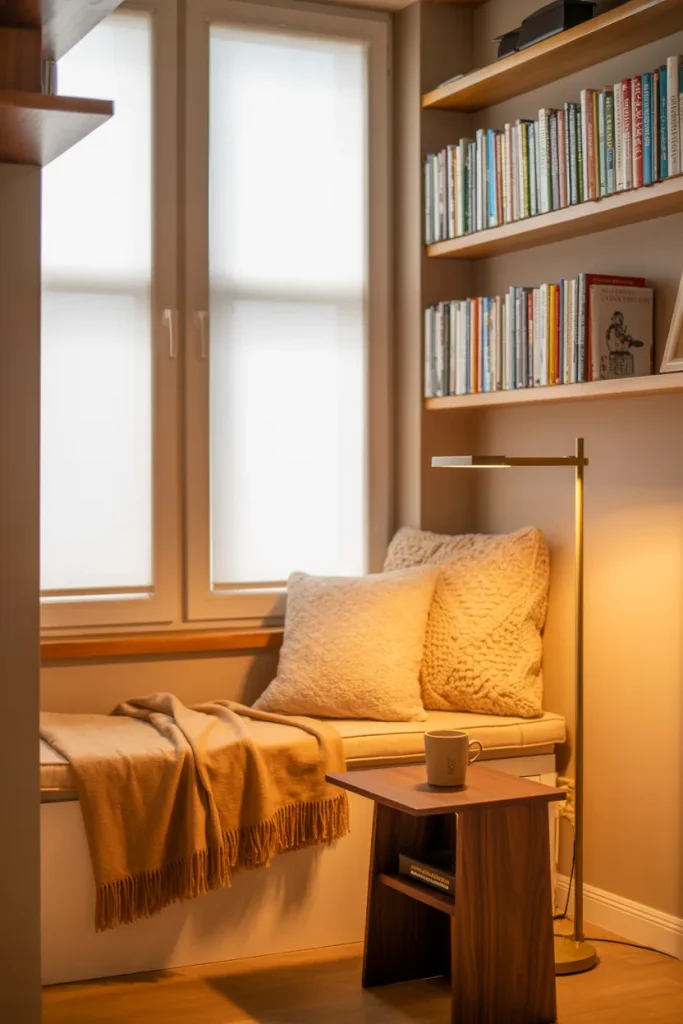
6. Creative Color Schemes for Small Workspaces
Choosing the right colors can transform your workspace atmosphere. Use light tones on walls and ceiling to create a sense of space. This improves energy and visual balance.
Match your desk, chair, and decor with a consistent color scheme. Add plants and art to enhance design and creativity. A balanced workspace feels fresh and motivating.
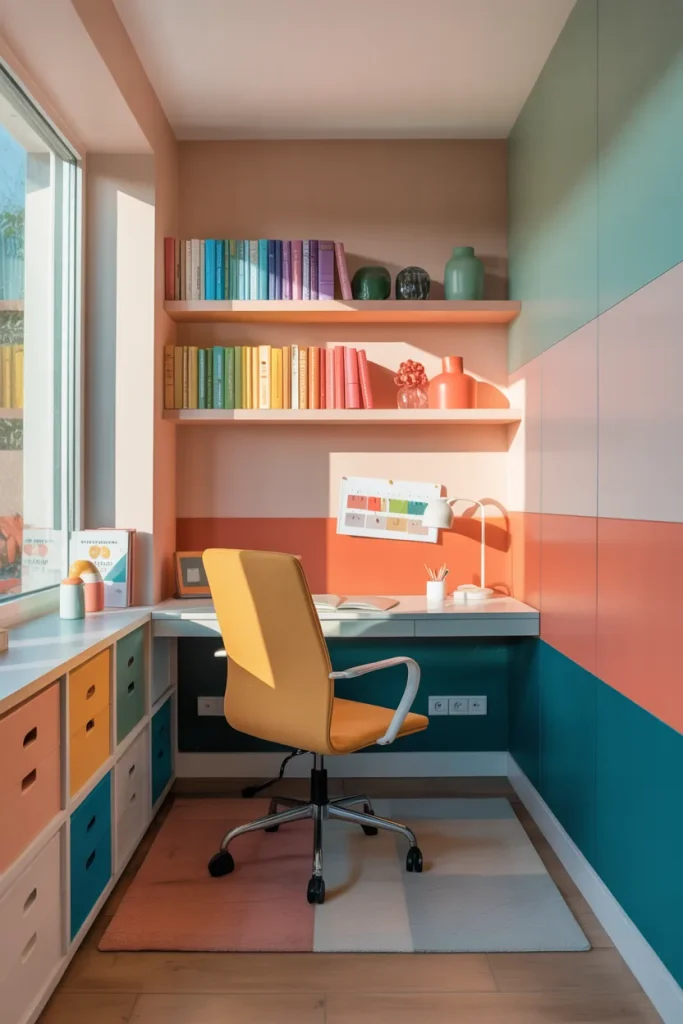
7. Incorporating Plants for a Fresh Atmosphere
Plants bring life and color into your workspace environment. Use pothos or snakeplant for easy maintenance and better air quality. This helps reduce stress and improve mood.
Place plants near lighting for healthy growth and better arrangement. Use stylish pots to match your workspace design. Greenery supports focus and productivity naturally.
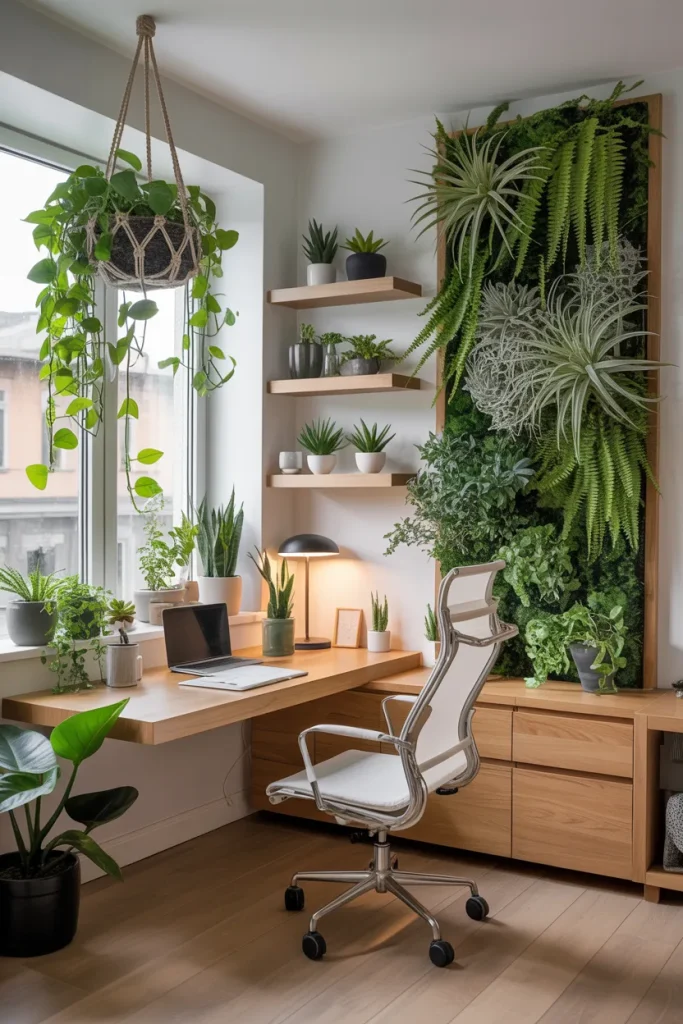
8. Utilizing Natural Materials for Warmth
Natural materials like wood add warmth and texture to your office. Use wood furniture for your desk, chair, and storage units. This creates a comfortable and balanced environment.
Add textiles like rugs and cushions to improve comfort. Include plants and soft tones for a relaxing atmosphere. These elements make your workspace feel welcoming.
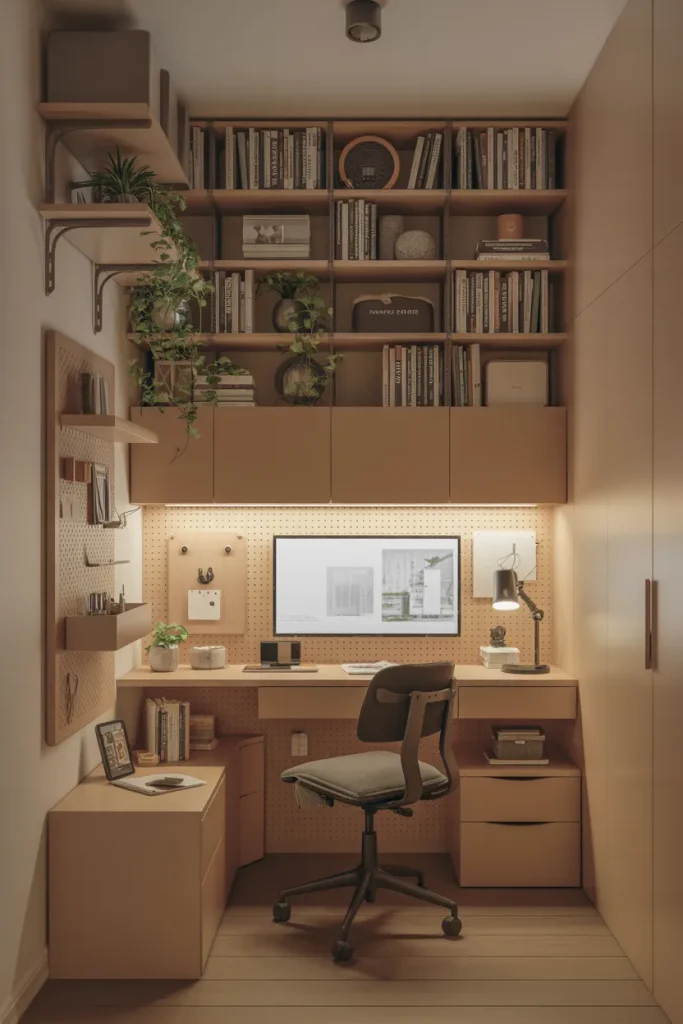
9. Best Minimalist Desk for Home Office
Choosing a minimalist desk keeps your workspace clean and distraction-free. Simple designs with sleek lines fit perfectly into small areas.
A clutter-free desk encourages better focus and productivity. It also makes your office look more organized and stylish.
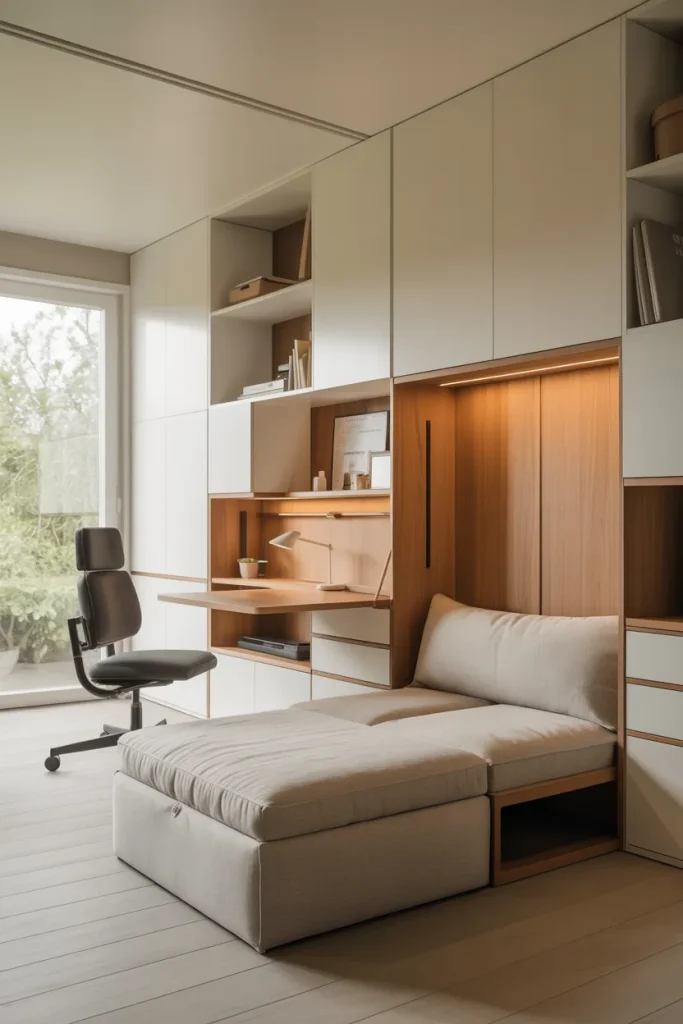
10. Justis Leaning Ladder Desk
A leaning ladder desk is perfect for tight spaces. It rests against the wall and provides shelves along with a workspace.
This design combines storage and function without taking up much room. It’s ideal for modern, compact home offices.
Must-See: Narrow Staircase Ideas
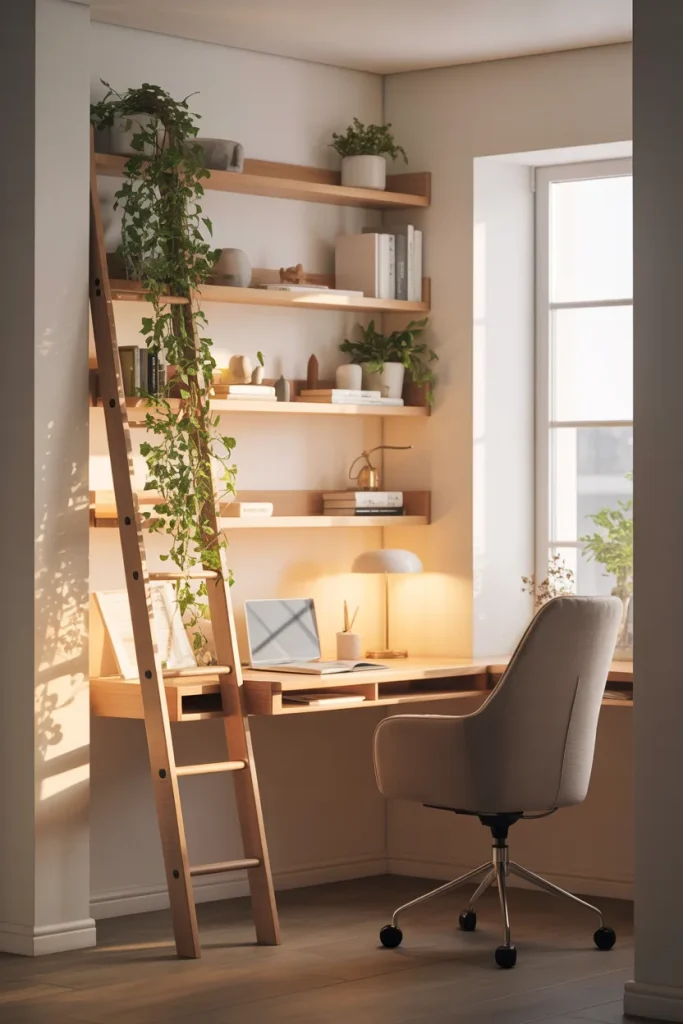
11. East Urban Home Secretary Desk
A secretary desk offers hidden storage and a fold-down work surface. It’s a great option for maintaining a clean look when not in use.
This type of desk is both practical and stylish. It helps keep your workspace organized while saving space.
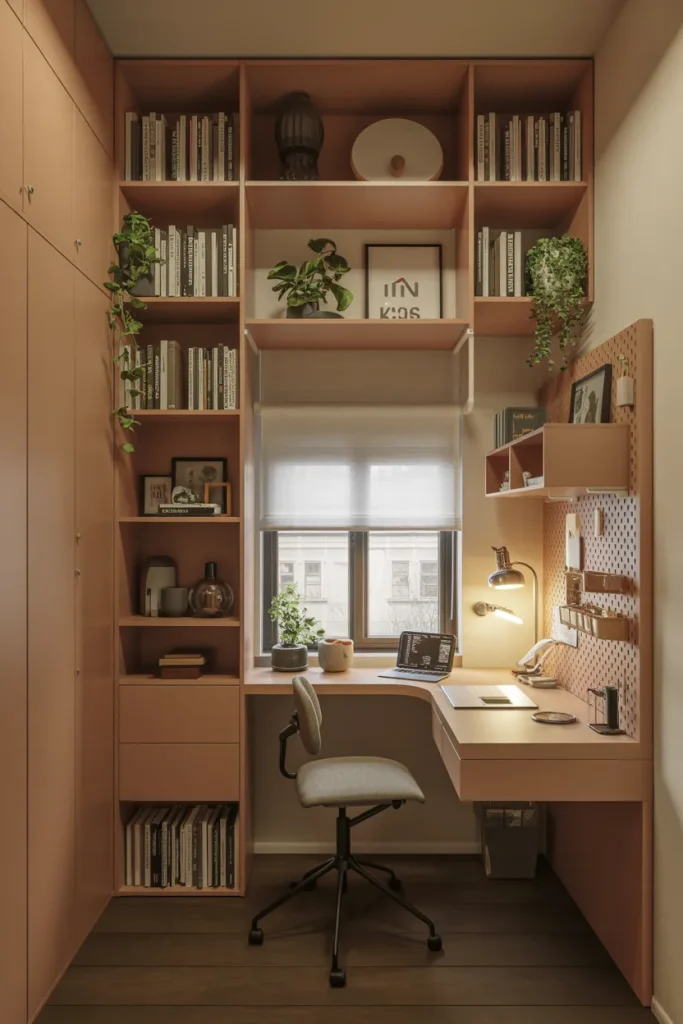
12. Utilize Natural Light
Natural light can significantly improve productivity and mood. Position your desk near a window to take full advantage of daylight.
Bright, natural lighting makes the space feel larger and more inviting. It also reduces the need for artificial lighting during the day.
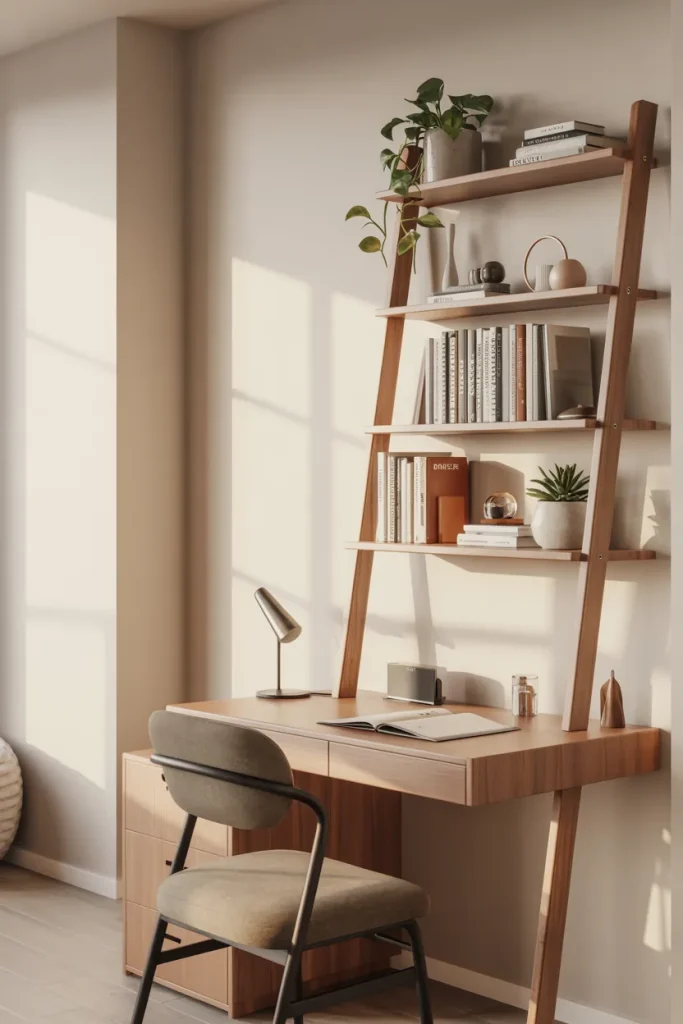
13. Designing for Comfort with Ergonomic Solutions
Ergonomic design improves comfort and supports better posture. Choose a chair that aligns with your desk height properly. This reduces strain during long work hours.
Use natural light from a window and keep your workspace organized. Add plants and books to create a balanced environment. This boosts productivity and focus.
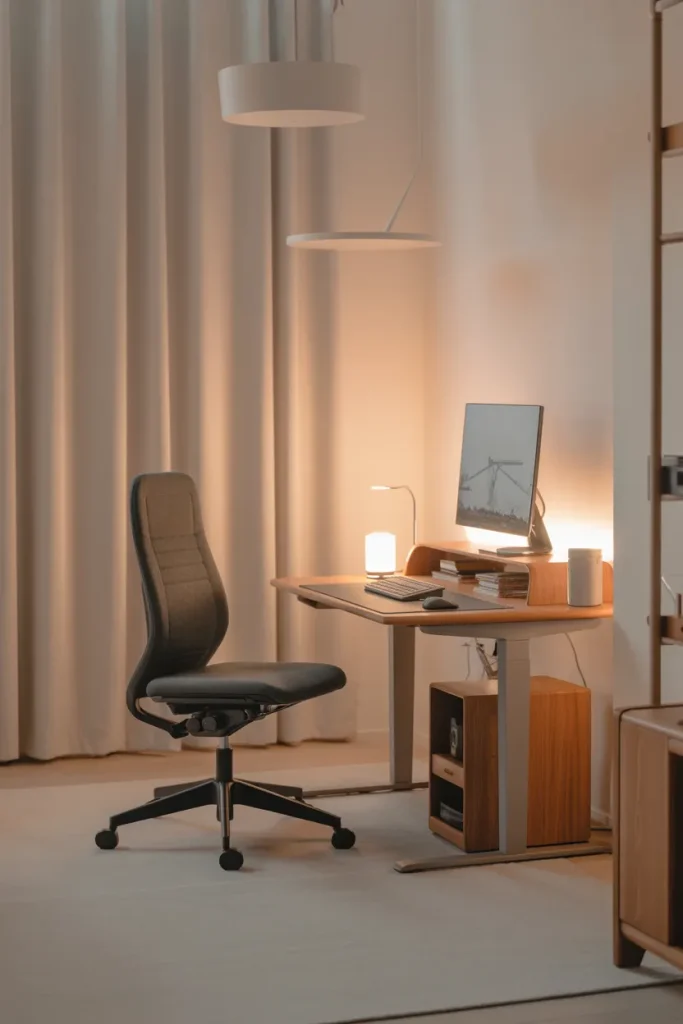
14. Setting Up a Tiny Home Office in a Closet
A closet office saves space while staying functional and stylish. Add a desk, chair, and shelves for storage and organization. This creates a compact workspace.
Use proper lighting and ergonomic furniture for comfort. Decorate with plants and simple colors to enhance style. A smart layout makes the space efficient.
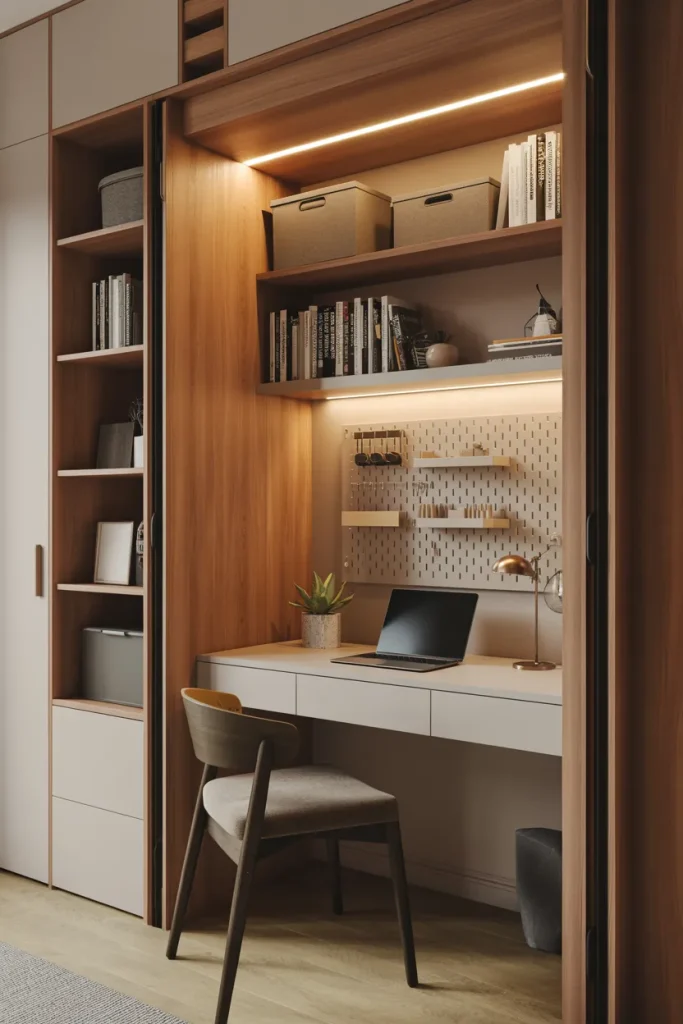
15. Personalizing Your Workspace
Personalization makes your workspace feel comfortable and inspiring. Add photos, books, and decor to reflect your style. This creates a unique environment.
Use plants, cushions, and lighting to improve comfort. Organize your desk and shelves for a clean layout. Creativity helps make the space enjoyable.
Must-See: Mobile Home Curb Appeal Ideas
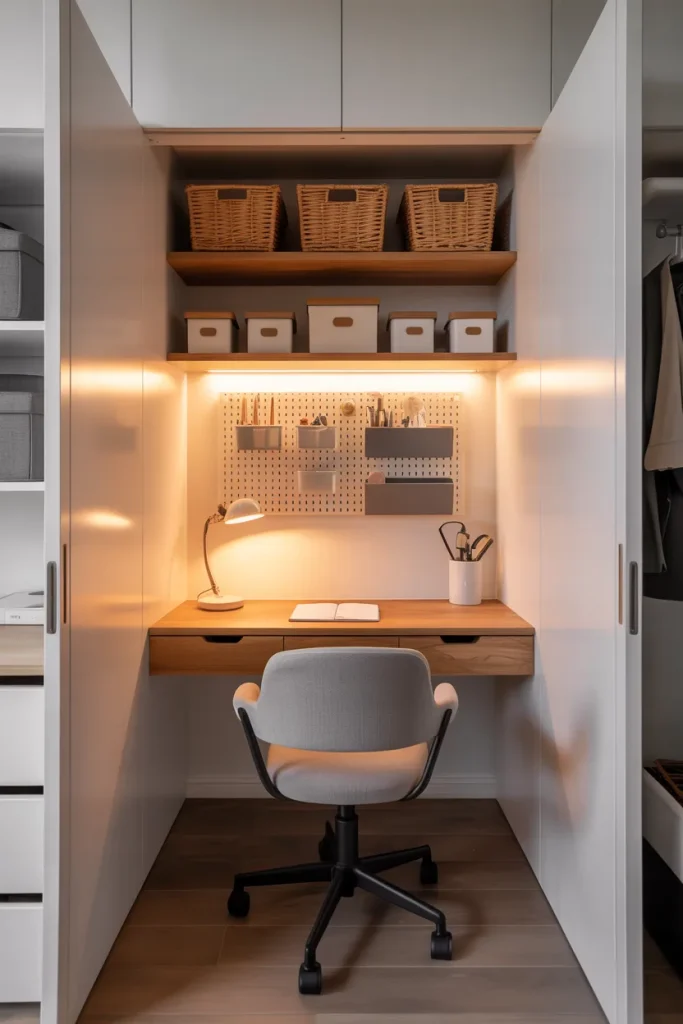
16. The Shift to Remote Work and Minimalism
Remote work has increased the demand for efficient home offices. Minimalist designs help create distraction-free environments that support productivity.
This shift emphasizes the importance of functional and well-organized spaces. Simplicity has become a key trend in modern work setups.
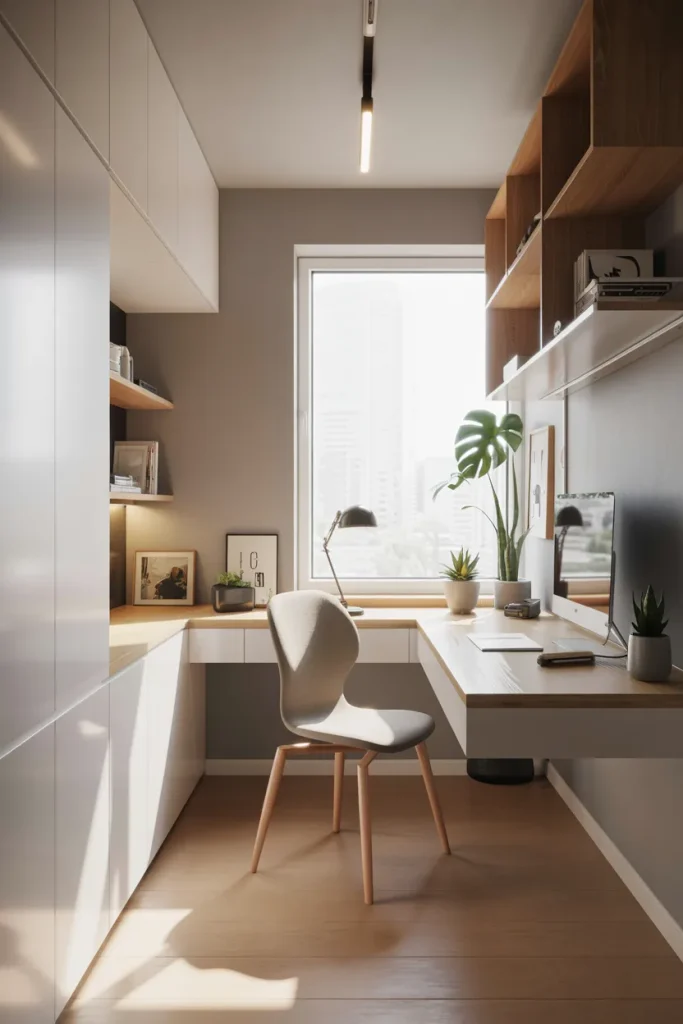
17. Why Tiny Home Offices Are Gaining Popularity
Tiny home offices are becoming popular due to limited space and changing work habits. People are focusing on smarter, more efficient designs.
These setups prove that productivity doesn’t depend on size. A well-designed small office can be just as effective as a large one.
18. Who Benefits Most from a Tiny Office Setup
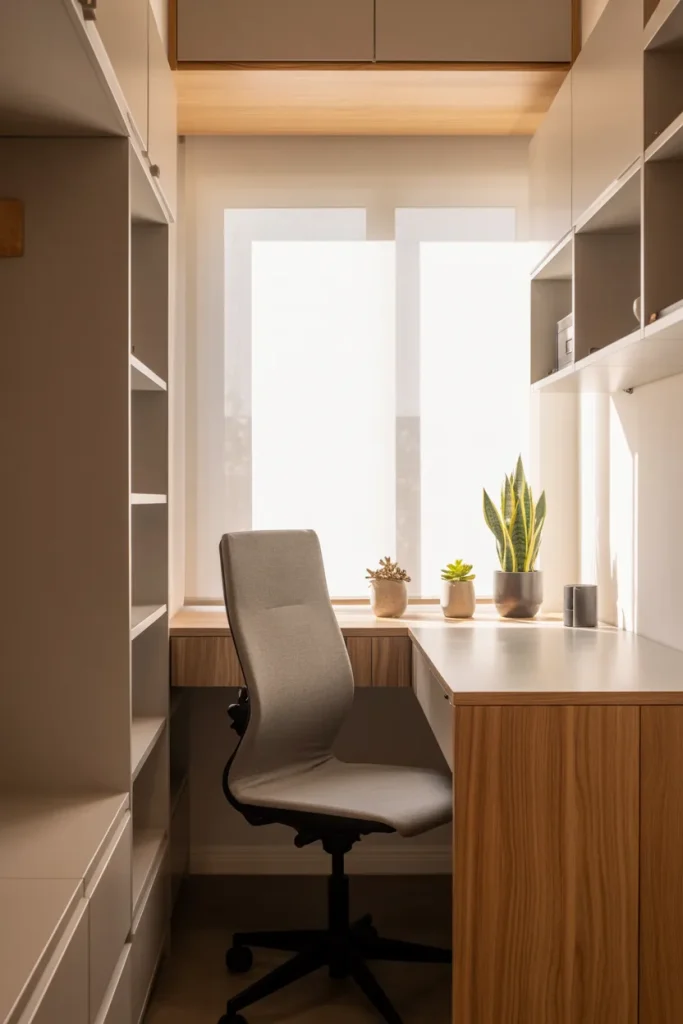
Freelancers, remote workers, and students benefit greatly from compact office setups. They provide a dedicated space without requiring a separate room.
Tiny offices are ideal for apartments and small homes. They offer flexibility while maintaining functionality.
19. Designing for Flexibility and Adaptability
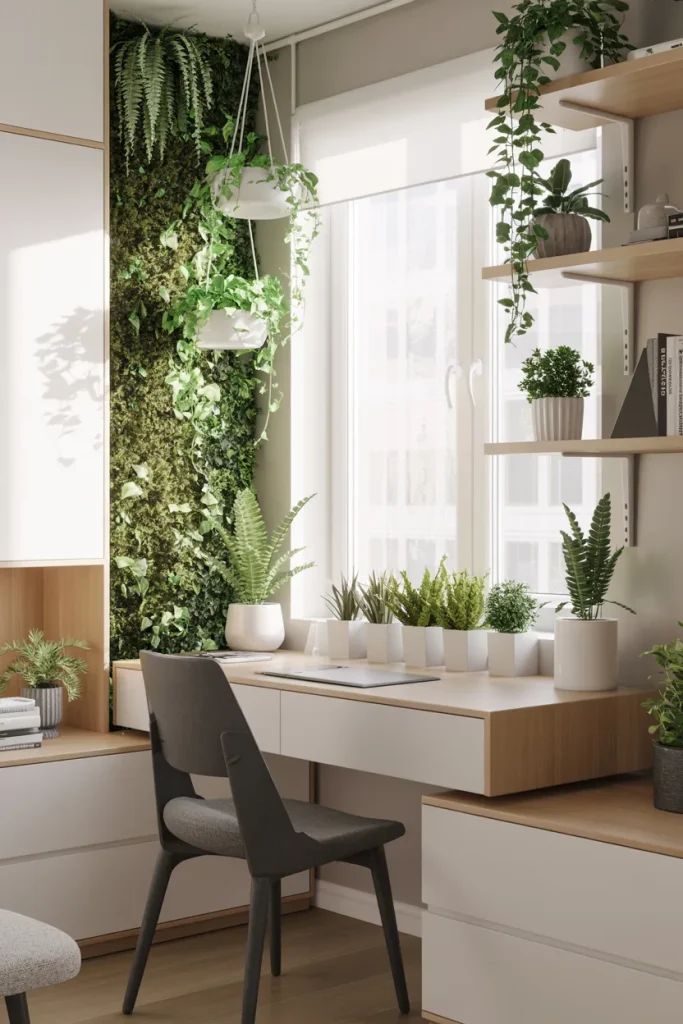
Flexible design allows your workspace to adjust to different needs. Use movable seating, like chairs or a sofa, for comfort. This improves functionality.
Arrange your desk, computer, and shelves for easy changes. Keep plants and organization balanced in the layout. Adaptability makes the space practical.
20. Choosing the Right Flooring for Small Spaces
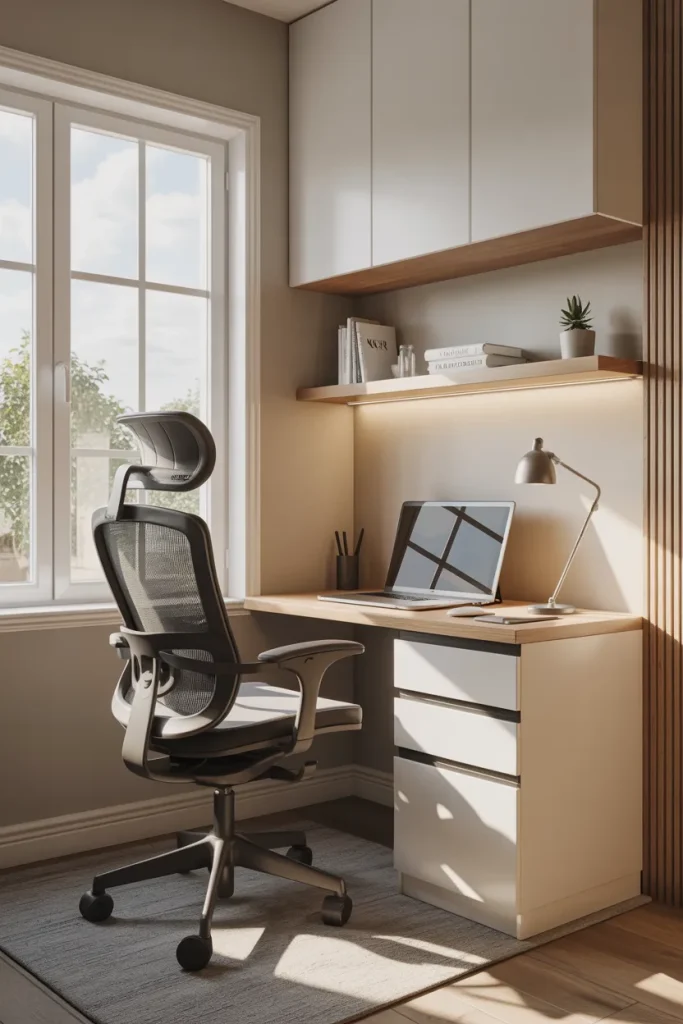
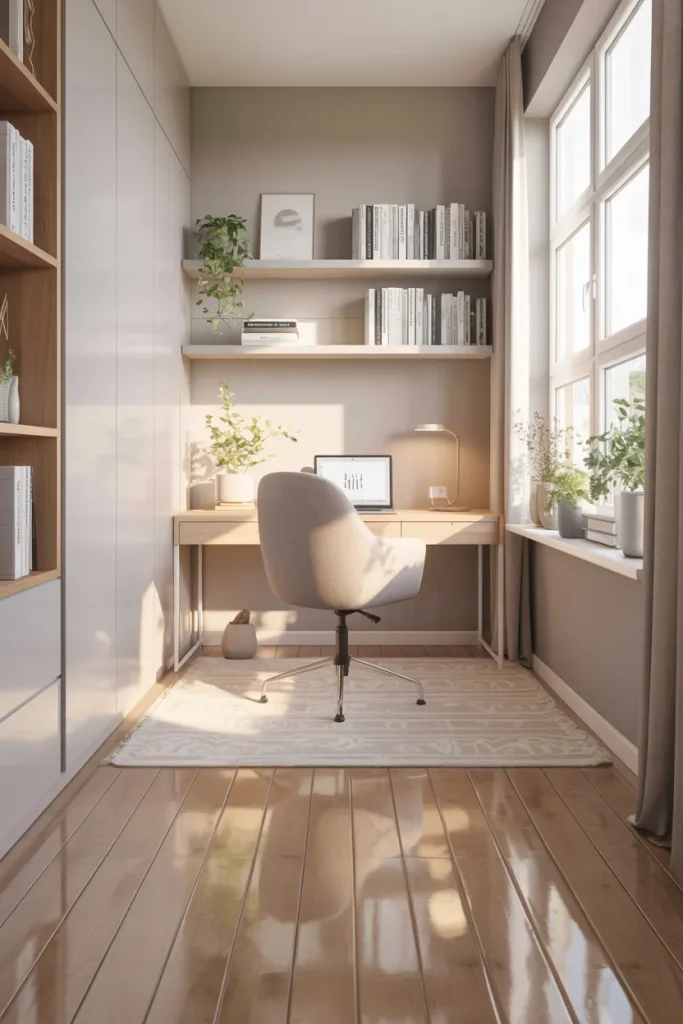
Flooring plays an important role in workspace comfort and design. Use wood flooring to add texture and warmth to the environment. This enhances overall style.
Choose light tones to reflect light from windows and create space. Add plants and furniture to match the design. Proper flooring improves comfort and balance.
Must-See: Grass Free Landscaping Ideas
Conclusion
Your workspace is more than just a setup—it’s where your ideas take shape and your focus finds direction. These 20 Tiny Home Office Ideas show that even the smallest spaces can support deep work, clear thinking, and a sense of control in your daily routine.
When your layout, lighting, and organization align with your needs, everything feels more intentional and efficient. Keep refining your space in a way that works for you, because a well-designed corner can quietly transform how you work and feel every day. Get More Modern Home Décor Inspiration Every Day at Decorifyo.Com.